
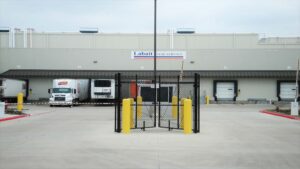
 Truck flow is one of the most practical and underappreciated design factors in industrial construction. A Houston facility can have a good location, a modern shell, and strong tenant interest, but if truck movement is inefficient, the building’s performance suffers immediately. Congestion, delay, safety issues, and lost productivity often trace back to site design decisions made long before operations begin.
Truck flow optimization is about more than making vehicles fit on the site. It is about designing circulation so that the building supports throughput, safety, and predictable movement under real operating conditions. In Houston, where freight activity is central to industrial value, this matters even more.
Why Truck Flow Is a Strategic Design Issue
For many industrial buildings, exterior operations determine whether the facility truly functions. That includes truck entry, queuing, maneuvering, trailer storage, dock approach, and how truck activity interacts with employee parking and passenger vehicles. A weak circulation plan can limit dock productivity and frustrate operators every day.
Common Truck Flow Problems
- Shared access between trucks and employee vehicles
- Insufficient turning radius
- Trailer parking placed where it interferes with circulation
- Dock layouts that create backing conflicts
- Site entries that generate queuing at the road
Many of these problems are not expensive to prevent in design, but they are expensive to live with once the building is operating.
Key Elements of Better Truck Flow
Clear Ingress and Egress Strategy
One of the best ways to reduce congestion is to establish clear truck entry and exit patterns. When traffic movement is intuitive, drivers spend less time correcting, waiting, or crossing conflicting paths.
Dock Positioning and Court Depth
Dock placement should support real truck maneuvering needs, not just maximize door count. Court depth, spacing, and adjacent circulation all influence how efficiently trucks can back, stage, and depart.
Separation of Vehicle Types
Passenger cars, visitors, and truck traffic should not fight for the same space if it can be avoided. Better separation improves safety and reduces confusion.
Trailer Storage Logic
Trailer parking can add operational value, but only if it does not damage circulation. Good planning keeps storage useful without creating bottlenecks.
Why Houston Sites Need Special Attention
Houston’s industrial corridors carry heavy freight activity, and many sites are selected specifically because they sit near critical logistics routes. That makes truck flow even more important. A building near a major corridor gains value when trucks can move through it cleanly. If circulation is poor, the location advantage is underused.
Truck Flow and Building Type
Truck flow needs vary by facility type. A cross-dock distribution center has very different circulation needs than a storage-focused warehouse or a manufacturing building with periodic outbound shipments. The site plan should be tailored to the operation instead of using a generic industrial layout.
How Truck Flow Supports Long-Term Value
Facilities with better truck circulation are easier to operate, easier to lease, and often easier to adapt over time. They reduce friction in daily operations and support higher freight intensity without immediate site stress. In a competitive Houston industrial market, that translates into stronger long-term value.
Planning Questions That Improve Site Performance
- What is the expected truck volume at peak times?
- How much queuing or staging is needed?
- Will trailers remain on site?
- How do employees and visitors enter the property?
- Can future throughput increase without redesigning circulation?
Truck Flow Is a Daily Operations Multiplier
One reason truck flow deserves so much attention is that it compounds over time. A circulation issue that adds only a few minutes to each movement can translate into a substantial operating penalty across weeks, months, and years. In a Houston facility with active freight movement, that daily drag affects labor productivity, carrier relationships, safety, and the overall user experience of the property.
That is why truck flow optimization should be considered part of the building’s performance strategy. The site should make movement easier under real operating conditions, including peak periods, trailer accumulation, and interactions between drivers, employees, and visitors. If it does, the property becomes more resilient and more valuable.
Truck Flow Optimization Checklist
- Separate truck and passenger circulation where possible
- Plan entries and exits to reduce queuing conflict
- Size courts and turning areas for real vehicle behavior
- Keep trailer storage from undermining circulation
- Design for future freight intensity, not only current demand
How KCS Approaches Houston Industrial Content and Planning
Across Houston industrial projects, the same pattern appears again and again: the best results come from early clarity. That means defining the operating goal of the facility, understanding what the site can support, and making construction decisions that reinforce long-term performance instead of creating avoidable tradeoffs. Whether the project involves warehousing, logistics, manufacturing, renovation, or site development, the strongest outcomes tend to come from teams that connect planning, budget, schedule, and operations from the beginning.
That is also why owners evaluating industrial construction topics should be cautious about one-size-fits-all advice. Houston projects are influenced by corridor access, drainage, utility coordination, freight conditions, and the actual day-to-day use of the facility. A practical construction partner helps connect those local realities to building decisions so the finished project works in operation, not just in concept.
For owners, that kind of alignment creates better decisions, fewer surprises during construction, and a finished facility that supports business goals with less day-to-day friction after turnover.
FAQs About Truck Flow Optimization in Houston
Why is truck flow so important in industrial design?
Truck flow affects safety, turnaround time, dock productivity, and whether the site supports daily operations efficiently.
Can a building still perform well if the circulation is weak?
Usually not. Poor circulation creates recurring friction that limits the value of the facility even if the building itself is well constructed.
Does truck flow planning matter more for distribution centers?
Yes, but it also matters for warehouses, manufacturing buildings, and other industrial facilities with frequent freight movement.
What is one of the most common site-planning mistakes?
A common mistake is forcing truck traffic, employee parking, and visitor access into overlapping circulation patterns.
KCS Construction helps owners optimize truck flow in Houston industrial projects by aligning building layout, dock planning, and site circulation with how the facility will actually operate.