
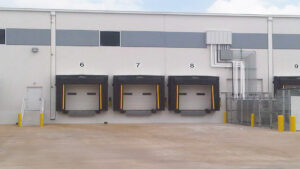
 Distribution center design is not just a larger version of warehouse design. A warehouse can be built primarily for storage. A distribution center is built for movement. It has to handle inbound freight, outbound freight, circulation, dock efficiency, labor flow, and increasingly fast order cycles. In Houston, where freight access and logistics performance are central to industrial value, that distinction matters.
Good distribution center design begins by understanding throughput. How quickly do goods move through the building? How many trucks must be accommodated? What type of loading pattern is expected? How much space is needed for staging, sorting, and support functions? Those operational questions should drive layout decisions from the start.
Why Houston Changes the Design Conversation
Houston offers access to the Port of Houston, strong regional highway connectivity, and major industrial corridors that support port-driven and inland distribution. That creates opportunity, but it also means design has to reflect real freight conditions. A distribution center in Houston should not simply fit on the site. It should take advantage of the site’s logistics context.
Core Design Priorities for Houston Distribution Centers
Dock Strategy
Dock count, dock spacing, loading patterns, and trailer support are central to design. A building with insufficient dock capacity or poor truck positioning will struggle operationally even if the shell itself is attractive.
Truck Flow and Circulation
Truck flow is one of the clearest differentiators between a basic industrial building and a strong distribution facility. Circulation routes, queuing, turning radiuses, ingress and egress points, and employee parking separation all affect safety and efficiency.
Clear Height and Internal Flexibility
Distribution centers often benefit from clear heights that support higher rack systems, operational flexibility, and long-term tenant appeal. Internal layout should also allow room for future changes in equipment or process.
Staging and Throughput Zones
High-performing distribution facilities need more than open floor space. They need well-organized staging and movement zones that prevent congestion near docks and support smooth order flow.
Port of Houston Relevance
Port access shapes how many Houston distribution centers are designed. Facilities tied to import volume, transloading, or rapid container-related movement may need different site and dock priorities than buildings serving slower regional distribution. Proximity to the port can justify a more throughput-focused layout because speed becomes part of the business case.
Designing Around Logistics Corridors
Corridors tied to I-10, I-45, Beltway 8, and related freight routes offer strong advantages, but location alone is not enough. The site has to support practical circulation, access, and future growth. Sometimes a slightly less obvious site produces a better operating result because truck movement is easier and congestion is lower.
Common Design Mistakes
- Using warehouse assumptions for distribution operations
- Underbuilding dock capacity
- Ignoring trailer and truck staging requirements
- Overlooking employee and visitor circulation
- Choosing a site that limits operational flow
Distribution centers are measured in throughput, not just square footage. The design should reflect that reality.
Balancing Speed, Cost, and Flexibility
Owners often want the fastest possible path to construction, but speed should not come at the expense of layout quality. A distribution center that opens quickly but creates constant operational bottlenecks is not a successful project. Smart design balances cost control, construction efficiency, and long-term function.
What Makes a Distribution Center Valuable Over Time
Long-term value comes from flexibility. A well-designed Houston distribution facility can support changing freight patterns, future tenant needs, increased volumes, and evolving equipment. That makes the asset more resilient and more attractive in a competitive market.
Designing for Throughput Instead of Just Square Footage
One of the strongest ways to differentiate a distribution center from a conventional warehouse is to focus on time. How fast can trucks move in and out? How efficiently can product transfer from receiving to staging to outbound shipment? How much friction does the building eliminate? When owners think in those terms, layout choices become much clearer. The design can prioritize performance rather than simply maximizing rentable area.
Houston makes this especially relevant because many distribution facilities are chosen for their logistics advantage. If the site is selected because it sits in a valuable freight corridor, the building should fully capitalize on that condition. That means docks, courts, circulation, and expansion logic should all support the speed and flexibility that location can provide.
Distribution Design Priorities
- Plan around expected throughput, not just storage
- Match dock strategy to the freight model
- Use site layout to protect circulation under peak conditions
- Allow flexibility for future process changes
- Integrate the building with the logistics role of the site
How KCS Approaches Houston Industrial Content and Planning
Across Houston industrial projects, the same pattern appears again and again: the best results come from early clarity. That means defining the operating goal of the facility, understanding what the site can support, and making construction decisions that reinforce long-term performance instead of creating avoidable tradeoffs. Whether the project involves warehousing, logistics, manufacturing, renovation, or site development, the strongest outcomes tend to come from teams that connect planning, budget, schedule, and operations from the beginning.
That is also why owners evaluating industrial construction topics should be cautious about one-size-fits-all advice. Houston projects are influenced by corridor access, drainage, utility coordination, freight conditions, and the actual day-to-day use of the facility. A practical construction partner helps connect those local realities to building decisions so the finished project works in operation, not just in concept.
For owners, that kind of alignment creates better decisions, fewer surprises during construction, and a finished facility that supports business goals with less day-to-day friction after turnover.
FAQs About Distribution Center Design in Houston
How is a distribution center different from a warehouse?
A warehouse is primarily designed for storage, while a distribution center is designed for movement, throughput, dock activity, and rapid freight handling.
Why does truck flow matter so much?
Truck flow affects safety, turnaround time, congestion, and dock efficiency. Poor circulation can reduce the building’s operational value.
Does the Port of Houston influence design?
Yes. Port-related operations may require more aggressive dock planning, faster circulation, and layouts built for freight velocity.
What is the biggest design mistake owners make?
One of the most common mistakes is treating a distribution center like a basic warehouse instead of designing around actual throughput requirements.
KCS Construction helps owners develop Houston distribution centers that are designed around real logistics performance, not generic industrial assumptions.