
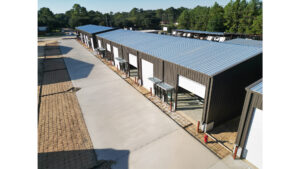
 When owners ask about the best areas for warehouse development in Houston, they are usually looking for more than a map. They want to know where a new facility will perform well, attract demand, and support long-term value. The answer depends on how the warehouse will be used. A building tied to regional distribution has different location priorities than one tied to port access, manufacturing support, or local delivery.
That is why the best Houston warehouse location is rarely defined by geography alone. It is defined by fit. The strongest sites are the ones where transportation access, labor reach, site utility, and building program work together.
What Makes a Houston Warehouse Location Strong?
A good warehouse site supports the operation before construction even begins. It offers practical freight access, enough room for circulation, reasonable utility expectations, and the right development conditions for the facility type. Owners should evaluate sites based on how the warehouse needs to function, not just whether land is available.
- Connectivity to major freight routes
- Reasonable access to labor pools
- Functional site geometry
- Civil and drainage feasibility
- Alignment with the building’s use case
Port-Influenced Locations
Some Houston warehouse developments benefit from relative proximity to the Port of Houston. These sites can be attractive for businesses tied to import/export activity, container movement, transloading, or supply chains where freight velocity matters. In these cases, reduced transportation friction can justify a more specialized building and site layout.
Corridor-Driven Development Areas
Many strong warehouse sites are tied to major logistics corridors rather than the port itself. Access to routes such as I-10, I-45, and Beltway 8 can create a powerful distribution advantage. These locations are often valuable because they support movement in multiple directions and allow operators to reach regional markets efficiently.
Sites for Regional Distribution vs Local Service
Not every warehouse in Houston should chase the same location logic. A regional distribution building may prioritize interstates, trailer storage, and cross-metro access. A local service warehouse may place greater importance on proximity to customers, technicians, or delivery routes. The right location depends on the mission of the building.
Land Is Not the Same as a Buildable Site
One of the biggest mistakes in warehouse development is assuming that available land automatically supports an efficient project. Shape, drainage, detention requirements, utility conditions, access points, and truck maneuvering room all affect the true usefulness of the site. A cheaper site can become expensive if it fights the building program.
How Site Selection Affects Construction Cost
Location choice affects cost more than many owners expect. The site can influence civil scope, paving needs, access design, utility extensions, and schedule risk. In Houston, where drainage and detention can be major factors, a site with cleaner development conditions may support a better overall return even if the land price is higher.
Future Flexibility Matters
The strongest warehouse developments are rarely designed only for today’s requirements. Good locations can support future expansion, tenant adaptability, operational changes, and a stronger exit strategy. A site that is slightly better aligned with long-term use can outperform a site chosen only for short-term acquisition cost.
Questions Owners Should Ask During Site Selection
- Does the location fit the warehouse’s actual operating model?
- Can truck flow work without forcing layout compromises?
- Are drainage and civil requirements manageable?
- Will the site support future expansion or reconfiguration?
- Does the building program match the transportation context?
How to Think About Location Like an Operator
Developers often evaluate Houston warehouse sites through land pricing, access maps, and headline demand. Operators usually think differently. They care about whether trucks can move efficiently, whether employees can reach the building, whether the site will handle peak activity, and whether the location actually reduces delivery friction. The best warehouse developments are created when those perspectives come together.
That is why site evaluation should include both market logic and facility logic. A desirable submarket is helpful, but it does not automatically create a strong warehouse property. The site still needs to support the intended building size, circulation pattern, and long-term operating plan. Choosing land without that analysis can undermine the value of even a promising location.
Site Evaluation Priorities
- Test the site against the real warehouse use case
- Review access and circulation before final acquisition
- Consider labor reach as well as freight reach
- Compare site work implications, not just land cost
- Protect flexibility for expansion and future tenant needs
How KCS Approaches Houston Industrial Content and Planning
Across Houston industrial projects, the same pattern appears again and again: the best results come from early clarity. That means defining the operating goal of the facility, understanding what the site can support, and making construction decisions that reinforce long-term performance instead of creating avoidable tradeoffs. Whether the project involves warehousing, logistics, manufacturing, renovation, or site development, the strongest outcomes tend to come from teams that connect planning, budget, schedule, and operations from the beginning.
That is also why owners evaluating industrial construction topics should be cautious about one-size-fits-all advice. Houston projects are influenced by corridor access, drainage, utility coordination, freight conditions, and the actual day-to-day use of the facility. A practical construction partner helps connect those local realities to building decisions so the finished project works in operation, not just in concept.
For owners, that kind of alignment creates better decisions, fewer surprises during construction, and a finished facility that supports business goals with less day-to-day friction after turnover.
FAQs About Warehouse Development Locations in Houston
What makes a warehouse location strong in Houston?
The best sites usually combine transportation access, usable geometry, labor reach, civil feasibility, and a good match with the building’s operating purpose.
Should every warehouse be near the Port of Houston?
No. Port access is valuable for some operations, but many warehouse users benefit more from strong highway connectivity and regional reach.
Why does site shape matter?
Site geometry affects building placement, dock layout, circulation, parking, and detention. A poor shape can force operational compromises.
Can a cheaper site create a more expensive project?
Yes. Lower land cost can be offset by heavier site work, drainage complexity, limited access, or a less efficient building layout.
KCS Construction helps owners evaluate Houston warehouse sites with construction, circulation, and long-term operations in mind so development decisions are based on more than land price alone.